

How FDI Drives Manufacturing Growth in Malaysia
Examines the direct relationship between foreign investment inflows and manufacturing sector expansion across key regions.
Read ArticleExploring how foreign direct investment facilitates technology transfer that measurably improves productivity and innovation across local industries

When multinational corporations invest in Malaysia, they’re not just bringing capital. They’re bringing expertise, processes, and knowledge systems that didn’t exist here before. This transfer of technology represents one of the most valuable long-term benefits of foreign direct investment.
Technology transfer happens through multiple channels — formal training programs, joint ventures, supplier relationships, and simply observing how foreign firms operate. Malaysian workers learn new manufacturing techniques. Local companies adopt better quality control methods. Supply chain practices improve across entire sectors. The cumulative effect reshapes industrial productivity across the nation.
We’re not talking about abstract improvements. Real manufacturing plants in Penang produce semiconductors with defect rates that rival Singapore. Automotive suppliers in the Klang Valley now meet international standards without leaving Malaysia. These aren’t accidents — they’re direct results of technology transfer embedded in FDI relationships.
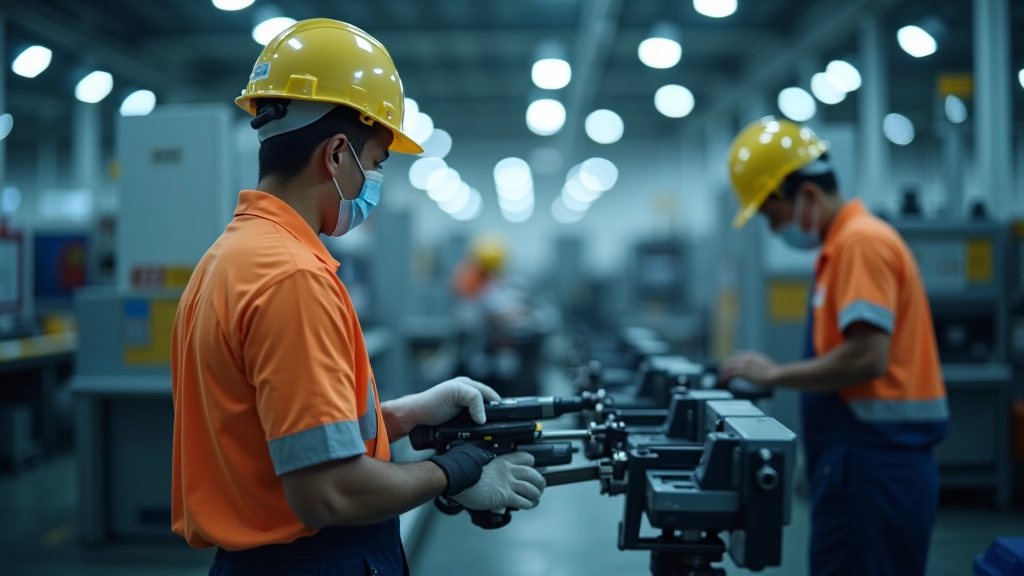
Technology transfer isn’t mysterious. It happens through deliberate mechanisms that companies implement because they need local suppliers and skilled workforces to succeed.
Foreign manufacturers need reliable suppliers. They invest in training local companies — showing them better production methods, quality standards, and inventory management. A semiconductor firm might work with 50+ local suppliers, transferring technical knowledge to each one.
Engineers and technicians working at foreign-owned facilities learn advanced techniques. When they move to other companies or start their own businesses, they bring this knowledge with them. It’s how technical expertise spreads across the entire sector.
Structured partnerships require knowledge sharing. Malaysian partners gain direct access to parent company systems, processes, and methodologies. They’re not just investing money — they’re building capacity.


The productivity improvements are substantial. Manufacturing plants that adopt foreign technology standards see output per worker increase by 20-40% within 3-5 years. That’s not incremental. That’s transformational.
These gains come from multiple sources. Better machinery requires better training. Improved quality control reduces waste. More efficient processes eliminate bottlenecks. Workers operating advanced equipment produce more in less time. The cumulative effect creates competitive advantages that Malaysian firms couldn’t achieve in isolation.
Consider the electronics sector. Malaysian manufacturers competing with Thailand and Vietnam initially had productivity disadvantages. Foreign direct investment in Penang changed that equation. Technology transfer through multinational operations raised local productivity levels significantly. Today, Malaysian electronics manufacturers compete successfully at the global level — that’s not accidental.
Innovation accelerates when workers understand global standards. Quality improves. Production costs decline. Export competitiveness increases. What starts as one company’s technology transfer becomes an entire sector’s competitive advantage.
How foreign investment transformed specific sectors and companies
German automotive suppliers establishing operations in Malaysia transferred precision manufacturing techniques. Local suppliers upgraded from basic stamping to complex assembly. Within 5 years, Klang Valley suppliers met ISO/TS standards and served international clients.
Intel and other semiconductor firms brought advanced testing methodologies and contamination control systems. Malaysian assembly facilities became centers of excellence. Workers trained in these facilities moved to local companies, spreading the expertise.
Contract manufacturers working with Apple and Dell adopted lean manufacturing and quality systems. This knowledge transferred to suppliers and competing firms. Malaysian EMS providers became competitive globally.
Technology transfer doesn’t stay contained within the foreign-owned firm. It spills over into the broader economy through multiple channels.
When skilled workers move between companies, they carry knowledge with them. When competitors observe successful techniques, they adopt them. When suppliers improve their operations, they serve multiple clients better. These spillover effects create productivity gains across entire industries, not just within foreign-owned firms.
Research shows that local firms competing near foreign-owned operations improve their productivity faster than similar firms in regions without FDI. They’re not copying — they’re learning. The presence of foreign firms raising standards elevates the entire ecosystem.


Foreign direct investment’s most valuable contribution isn’t immediate capital. It’s the knowledge, expertise, and capabilities that foreign firms bring. Technology transfer creates productivity improvements that persist long after initial investments.
Malaysian workers trained in advanced manufacturing techniques don’t forget those skills. Companies adopting better processes don’t revert to old methods. Supply chains that meet international standards maintain those standards. The productivity gains compound over years and decades.
This is why attracting quality FDI matters beyond immediate job creation. The technology, processes, and knowledge that foreign investors bring transform local capacity. They enable Malaysian companies to compete globally. They create competitive advantages that benefit the entire economy.
Technology transfer turns foreign investment into permanent productivity gains — gains that benefit local workers, local companies, and the entire Malaysian economy for decades.


This article is provided for educational and informational purposes only. It aims to explain how technology transfer functions within foreign direct investment contexts and its relationship to productivity improvements. The information presented is based on economic research and publicly available data regarding FDI trends and manufacturing practices.
Specific examples and case studies represent general patterns observed across industries and are not intended as comprehensive analyses of individual companies or sectors. Economic conditions, investment outcomes, and productivity gains vary based on numerous factors including market conditions, company strategies, and policy environments. Circumstances differ significantly across regions, industries, and time periods.
For investment decisions, business strategy, or policy matters, please consult with qualified professionals, economists, or official sources such as MIDA (Malaysian Investment Development Authority). This content should not be considered investment advice or professional guidance for business decisions.